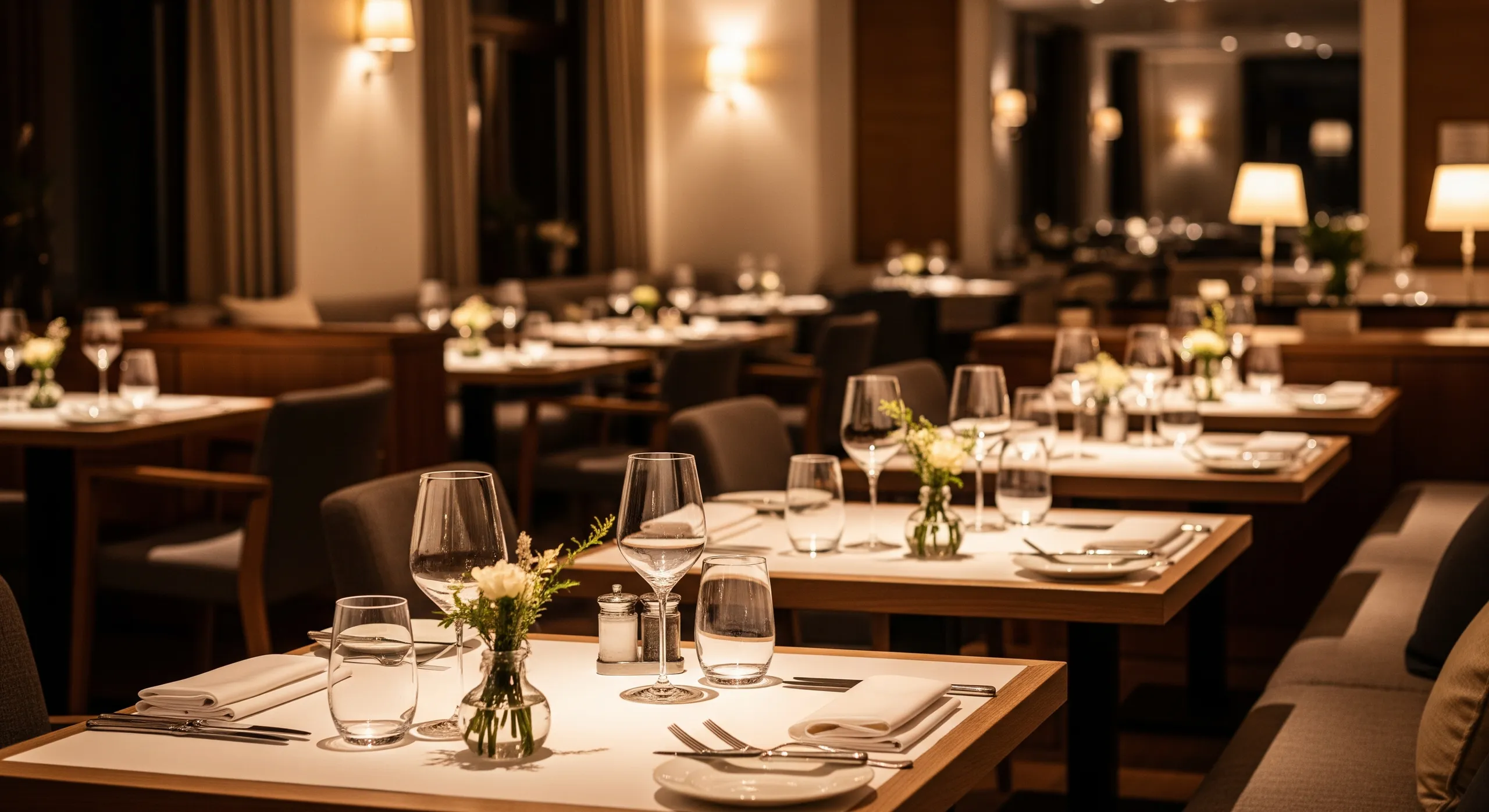
Fill More Seats with a Website That Works as Hard as You Do
Online ordering, POS menu sync, reservation systems, and Google Maps visibility for restaurants, cafes, tap rooms, and food trucks across Southern Utah.
What Restaurant Web Design Actually Is
Restaurant web design is custom website development for food-service businesses that monetize through dining in, delivery, catering, or online ordering - where the site doubles as a menu, a reservation system, and an online-ordering channel. That last part is what separates a restaurant site from a regular small-business site. A plumber's website sells the idea of hiring a plumber. A restaurant's website is a direct sales channel - every visit either books a table, places an order, or sends a catering inquiry, or it failed.
I'm Brett Benassi. I run B-Squared Technologies out of the Southern Utah area and I build sites for full-service restaurants, fast-casual concepts, coffee shops, bakeries, pizzerias, food trucks, catering operations, tap rooms, and fine-dining spots across St. George, Washington, Hurricane, Ivins, Santa Clara, and the Zion-corridor towns like Springdale and La Verkin. My background is development and local SEO, not generic marketing packages - every site I ship is built around the three things a restaurant actually needs: more covers, more tickets, and less friction between a hungry person and their food.
Washington County added more than 30,000 residents between 2020 and 2024 according to U.S. Census estimates. That growth has pulled new restaurant openings into the market faster than existing operators can keep up with, which means competition for attention in Google Maps and the delivery apps is intensifying every quarter. A properly built website plus dialed-in local SEO is how independent restaurants compete with the chains rolling into town.
Challenges Facing Southern Utah Restaurants
You're running the line and managing the floor. Here's where the web side usually goes sideways.
Menu Drift Across Your Website, GBP, and Delivery Apps
Your site still shows a $14 burger, DoorDash has it at $16, Google Business Profile pulled an old PDF menu from 2022, and the printed menu at the host stand is the only one that's right. That inconsistency kills conversions - 54% of diners check the menu online before picking a restaurant (Zagat Dining Trends Survey), and if yours looks outdated or wrong, they're going to your neighbor instead.
Tourism-Season Traffic Spikes That Break the Site
Zion pulls more than 5 million visitors a year and the Hurricane/Springdale corridor gets hit hard at lunch from March through October. If your hosting falls over when 400 hungry tourists hit your menu page at once, or your online ordering system times out during the Saturday golf-finish dinner rush in St. George and Ivins, you're losing real revenue - not just bad UX.
Utah Liquor Law Compliance Most Web Designers Don't Understand
If you hold a DABS full-service restaurant license, a beer-only license, a dining club license, or operate as a BYOB spot, what you can show on the website is not the same as what a restaurant in Las Vegas can show. Wine list rules, cocktail photography, happy hour language, and even the way you display price points all have compliance implications. A generic template will put your license at risk.
Food Photography That Looks Like a Phone Snapshot
Bad food photos on the menu page directly drop order rates. Harvard Business Review research on menu psychology shows photo quality affects perceived food quality before the plate is even ordered. But shooting every dish with a food stylist is overkill for a Hurricane family diner. There's a middle path - phone-shot, well-lit, consistently staged - and most restaurant sites get this wrong in one direction or the other.
How B-Squared Addresses Each One
Websites built for the way restaurants actually operate - in the weeds, during a rush, with a short-staffed team.
One Source of Truth for the Menu
I wire your website menu to sync with your POS when it can - Toast, Square for Restaurants, Clover, TouchBistro, Lightspeed Restaurant, and Revel all have menu APIs or export feeds. Change the price in Toast, it updates on the site. Where a direct sync isn't possible (Aloha, legacy setups), I build a single admin page where you update once and the site, Google Business Profile menu attribute, and structured data all pull from the same record.
Online Ordering That Matches How You Actually Operate
Not every restaurant needs full online ordering - and not every restaurant needs the same kind. I've set up Toast Online Ordering for full-service spots that want to keep ticket control, ChowNow for independent operators who hate the 30% marketplace fees, Square Online for quick-service and coffee shops, and BentoBox for hospitality groups that want a marketing site and ordering under one roof. The decision hinges on your POS, your margins, and whether you're already on DoorDash for Business, Uber Eats Manager, and Grubhub Marketplace.
Reservations Wired to Your Floor Plan
OpenTable and Resy own most of the fine-dining market. Tock is where tasting-menu and ticketed-experience operators live. SevenRooms is where hotels and hospitality groups consolidate guest data. Yelp Reservations is a cheap option that plays well with casual spots. I match the tool to the concept - not the other way around - and embed the widget so it doesn't tank your page speed.
Schema Markup Google Actually Uses
Every restaurant site I build ships with full Schema.org Restaurant markup - hasMenu, hasMenuSection, hasMenuItem, acceptsReservations, servesCuisine, priceRange, openingHoursSpecification, and the correct geo coordinates. That's what makes your menu items show up directly in Google search results and what powers the GBP 'Order online' button with accurate pricing. BrightLocal's 2025 research shows listings with structured data get 27% more profile interactions.
Built Around How Southern Utah Actually Dines
A national agency will sell a template that treats Hurricane and Houston the same. They don't know that Zion National Park drives more than 5 million visitors a year and that overflow from Springdale hits the Hurricane corridor hard at lunch - a restaurant on State Street in Hurricane or SR-9 between March and October needs a site that loads fast on a tourist's phone with weak coverage and lets them order or reserve in under 30 seconds. They don't know that the golf economy in St. George and Ivins creates a hard Saturday 5-7pm dinner rush as foursomes finish at Sunbrook, Entrada, Green Spring, and Sky Mountain and head straight to dinner. Your site needs to handle that crush without falling over.
They also don't understand Utah's DABS-driven alcohol framework. Full-service restaurants, beer-only spots, dining clubs, and bars each operate under different license classes with different rules for how alcohol can be presented on a website. BYOB restrictions still apply in most venues here. Happy hour advertising has limits most operators don't realize until a competitor reports them. I build sites that respect the line, not sites that get flagged.
Hurricane is the family-dining market - price-sensitive, looking for kids' menus and quick service. St. George proper is where the growth-driven new-concept openings are happening, especially along River Road and in the Millcreek corridor. Ivins and Santa Clara skew higher-ticket, destination dining tied to Snow Canyon tourism. Food trucks in this region live and die by Instagram location tagging and Google Business Profile location updates - if your truck parks at Ancestor Square one Friday and Dixie Tech the next, your site and GBP have to keep up. I build that kind of real-time location flow into food truck sites so customers can actually find you.
Numbers That Shape How I Build These Sites
- 54% of diners check the menu online before choosing a restaurant (Zagat Dining Trends Survey). If your menu is outdated, hidden behind a PDF download, or inconsistent with what's on DoorDash, you're losing the decision before the customer ever walks in.
- 72% of third-party delivery orders happen Thursday through Saturday (DoorDash industry data). If your online ordering channel isn't stress-tested for that window, you're dropping tickets at the exact hours you need them most.
- 77% of diners visit a restaurant's website before dining in for the first time (National Restaurant Association State of the Industry report). The website isn't supplemental - it's the first plate the customer tastes.
- Restaurants using integrated online ordering see 20-30% higher average ticket sizes versus phone orders (Toast Restaurant Industry Report). Guests upsell themselves when they can see the whole menu and add items without feeling rushed.
- Listings with structured data get 27% more Google Business Profile interactions (BrightLocal local consumer research). Schema.org Restaurant markup with hasMenu and hasMenuItem is how your prices and dishes show up directly in search.
- Zion National Park drew 5 million-plus visitors in 2024 (National Park Service visitation data). That tourism overflow into Springdale, La Verkin, Hurricane, and St. George is a lunch and dinner revenue stream that most independent restaurants are underselling on their own websites.
- Square reports that restaurants offering online reservations see up to 27% fewer no-shows than phone-only booking (Square Restaurant Industry Report). OpenTable, Resy, Tock, and SevenRooms all add deposit and cancellation tools that phone reservations can't match.
Case Study
Local Mexican Restaurant
A family-owned restaurant in St. George was losing customers to chain competitors with better online presence.
Challenge:
No online ordering, outdated website, poor Google visibility
Results After 6 Months
185%
Increase in Online Orders
#1
Google Maps for "Mexican Food St George"
4.8★
Average Rating (up from 4.2)
Restaurant Website FAQs
How much does a restaurant website cost in Southern Utah?
Restaurant websites typically fall within our Starter ($1,600 - $3,000) or Professional ($3,500 - $7,000) packages depending on features like online ordering, reservation systems, POS menu sync, and custom photography. For Starter and Professional packages, I require a 50% deposit to begin with the remainder due on completion. Hospitality groups with multiple concepts or a parent company running a few spots usually need the Professional tier at minimum.
Can you integrate with my existing POS system?
Yes. I work with Toast, Square for Restaurants, Clover, TouchBistro, Lightspeed Restaurant, Revel, and Aloha. Toast and Square have the cleanest menu sync APIs and are the easiest to pull real-time pricing from. Clover and TouchBistro take more setup but work. Aloha and older on-prem systems usually require a manual update flow, which I build into the admin dashboard so your manager can update the site in 30 seconds without calling me. If you're not sure which POS is right for a new concept, I can walk you through the tradeoffs before you commit.
How do you handle Utah liquor law compliance for bars and tap rooms?
Utah's Department of Alcoholic Beverage Services (DABS) controls what you can and can't say about alcohol on a website depending on your license class - full-service restaurant, beer-only, dining club, bar, tap room, or BYOB. I know the rules that matter for web presence: you can't show a price list for cocktails the same way you can in most states, happy hour advertising has restrictions, and for dining clubs the membership framing has to be handled carefully. I also make sure the wine list page, tap list, and bottle shop section (for venues that sell to-go where permitted) match your actual license. This is not legal advice - your attorney signs off on the final language - but you won't end up with a site that gets flagged in a DABS audit.
Do you offer photography services for my menu?
Yes, two ways. For fine-dining and higher-ticket concepts in St. George and Ivins, I partner with local food photographers who know restaurant lighting - usually adds 1-2 weeks and is worth every dollar. For quick-service, family dining, food trucks, and cafes where that budget doesn't make sense, I shoot menu items myself with a mirrorless camera and a simple light kit. The second option is faster and cheaper, and the quality is good enough that customers order from it. The mistake most restaurants make is pulling stock photos that don't look like the actual plate - diners notice immediately.
How do you help with Google Business Profile and the 'Order online' button?
GBP's 'Order online' button is one of the highest-converting CTAs in local search - when it's wired correctly. I make sure your ordering link (Toast Online Ordering, ChowNow, Square Online, whatever you use) is set as the primary ordering provider in GBP, that the menu attribute is populated with current items and prices, that your hours reflect tourism-season versus off-season, and that your photos are refreshed quarterly. Google's Business Profile data shows listings that update photos monthly get meaningfully more calls and direction requests than listings that don't.
How quickly can you build my restaurant website?
Most restaurant sites are live in 3-4 weeks. I prioritize menu, online ordering, and GBP integration in week one so you can start capturing orders while I build out the rest - photography, story/about page, catering inquiry flow, press coverage, and staff pages. If you're opening a new location in St. George, Washington, or Hurricane and have a hard launch date, I can go faster with a phased rollout: MVP site live for soft opening, full buildout within 6 weeks of grand opening.
Ready to Serve More Customers?
Get a free website audit and see exactly how we can help your restaurant grow.